
Obstetrics and Gynaecology: Laparoscopic and Gynaecology Surgery
Laparoscopic Hysterectomy and Gynaecology Surgery near Bangalore
Keyhole (laparoscopic) and hysteroscopic surgery for fibroids, cysts, heavy bleeding, prolapse and family planning, with open surgery when it is safer
- 1 to 2 daysUsual stay after keyhole surgery
- 2 to 4 weeksUsual recovery
Gynaecology surgery
What is a laparoscopic hysterectomy?
A laparoscopic hysterectomy removes the womb (uterus) through three or four small cuts in the tummy, using a camera and fine instruments. Compared with open surgery it usually means less pain, a hospital stay of one to two days and a return to normal life in two to four weeks. Our gynaecologists perform it at SMSIMSR, near Bangalore.
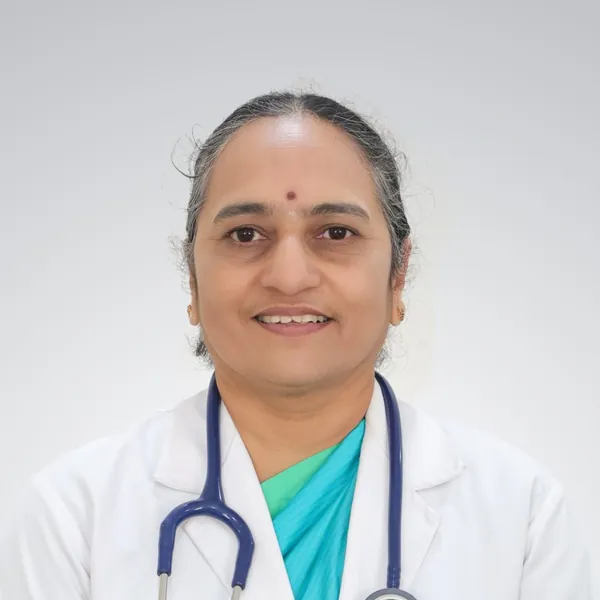
Laparoscopic (keyhole) and hysteroscopic surgery are carried out at SMSIMSR for fibroids, ovarian cysts, heavy or abnormal bleeding, endometriosis, prolapse and family planning. Dr Akkamahadevi C Hiremath specialises in gynaecological endoscopy and prolapse surgery, and has published on laparoscopic repair of caesarean scar defects and laparoscopic sacrocolpopexy.
A hysterectomy is a big decision. Many problems, such as heavy periods or small fibroids, can first be treated with medicines, a hormone coil or a smaller operation that keeps the womb. Your gynaecologist will explain all the options before you decide.
What we do
Gynaecology operations we perform
| Procedure | What it does | Usual stay | Usual recovery |
|---|---|---|---|
| Laparoscopic hysterectomy | Removes the womb, with or without the tubes and ovaries, through keyhole cuts | 1 to 2 days | 2 to 4 weeks |
| Vaginal hysterectomy | Removes the womb through the vagina, with no cut on the tummy; often used for prolapse | 1 to 2 days | 3 to 4 weeks |
| Abdominal (open) hysterectomy | Removes the womb through a cut across the lower tummy, for a very large womb or cancer | 3 to 5 days | 6 to 8 weeks |
| Myomectomy | Removes fibroids and keeps the womb, for women who want children | 1 to 3 days | 2 to 6 weeks |
| Ovarian cystectomy | Removes a cyst and keeps the healthy ovary | 1 day | 1 to 2 weeks |
| Hysteroscopy | A thin camera through the cervix to look inside the womb and remove polyps, small fibroids or a septum | Day care | 1 to 2 days |
| Prolapse repair | Lifts and supports a dropped womb or vaginal vault, including sacrocolpopexy and the Fothergill operation | 2 to 3 days | 4 to 6 weeks |
| Laparoscopic tubectomy | Permanent family planning by closing both fallopian tubes | Day care | A few days |
Stays and recovery are typical figures; yours depend on your health and the operation.
Choosing the approach
Keyhole or open surgery: what is the difference?
| Laparoscopic (keyhole) | Open (abdominal) | |
|---|---|---|
| Cuts | Three or four cuts of 0.5 to 1 cm | One cut of 10 to 15 cm |
| Pain after surgery | Less | More |
| Hospital stay | 1 to 2 days | 3 to 5 days |
| Back to normal activity | 2 to 4 weeks | 6 to 8 weeks |
| Best for | Most hysterectomies, fibroids, cysts, endometriosis and tubectomy | A very large womb or fibroids, some cancers, or many previous operations |
Sometimes keyhole surgery is changed to open surgery during the operation for safety. Your surgeon will discuss this with you beforehand.
Conditions
Conditions treated with surgery
Fibroids
Non-cancerous growths in the womb. Size alone does not decide treatment: heavy bleeding, pain, pressure or trouble getting pregnant do.
Ovarian cysts
Most are harmless and go away on their own. Large, persistent or painful cysts, or those that look unusual on a scan, may need removal.
Heavy or abnormal bleeding
Periods that soak a pad every hour or two, last more than 7 days, or bleeding after menopause, which always needs checking.
Endometriosis
Tissue like the womb lining growing outside the womb, causing painful periods and pain during sex, and sometimes difficulty conceiving.
Prolapse
The womb or vaginal walls dropping down, felt as a lump or heaviness, often after childbirth or menopause.
Urine leakage
Leaking urine on coughing or sneezing, or an urgent need to pass urine. Exercises help many women; some need surgery.
After surgery
Recovery after a laparoscopic hysterectomy, week by week
Day of surgery
You wake in the recovery room. Pain relief is given, and you sit up and drink fluids that evening.
Day 1 to 2
You walk on the ward, eat normally and the drip and urine tube come out. Most women go home one to two days after a laparoscopic hysterectomy.
Week 1 to 2
Short walks every day. Light housework only. Some vaginal spotting is normal.
Week 2 to 4
Most women return to desk work and driving after keyhole surgery. Avoid lifting heavy buckets or children.
Week 6
Review visit. Most women can return to full activity and sex after a check. After open surgery, recovery takes longer.
What are the side effects of uterus removal?
Your periods stop and you cannot become pregnant. If the ovaries are kept, your hormones continue and menopause comes at the usual time. If both ovaries are removed before menopause, menopause starts straight away; hormone treatment may be offered. Short-term risks include bleeding, infection and injury to the bladder or bowel, which are uncommon.
Gynaecological surgeons
Our gynaecological surgeons
- Obstetrics and Gynaecology
Dr Akkamahadevi C Hiremath
Assistant Professor, Obstetrics and GynaecologyGynaecological endoscopy (laparoscopy and hysteroscopy) and urogynaecology, including prolapse and urine leakage - Obstetrics and Gynaecology
Dr Deepak Thakker
Head of Department and Professor, Obstetrics and GynaecologyObstetrics and gynaecology, and leadership of the department’s clinical and teaching work - Obstetrics and Gynaecology
Dr Padmasri R
Medical Superintendent and Professor, Obstetrics and GynaecologyHigh-risk obstetrics, emergency obstetric care, colposcopy and early detection of cervical cancer - Obstetrics and Gynaecology
Dr Nandeesha T D
Assistant Professor, Obstetrics and GynaecologyObstetrics and gynaecology, including rare and complex gynaecological conditions - Obstetrics and Gynaecology
Dr Brunda Muniswamy
Assistant Professor, Obstetrics and GynaecologyHigh-risk obstetrics, colposcopy and cervical cancer screening, with interests in infertility, laparoscopy and foetal medicine


Cost, insurance and schemes
How much does a laparoscopic hysterectomy cost at SMSIMSR?
The cost depends on the operation, keyhole or open, and the length of stay. Most health insurance policies cover a hysterectomy when it is medically needed.
Cashless insurance
SMSIMSR accepts most major private health insurance policies, with cashless treatment for eligible policies and no upfront deposit for approved, covered treatment. Partners include Star Health, Niva Bupa, Care Health, HDFC ERGO, ICICI Lombard, New India Assurance, United India, Oriental, National Insurance and TPAs such as Medi Assist, MD India, FHPL and Vidal Health.
Insurance and cashless treatmentInsurance help desk
Check your policy before admission. Bring your insurance e-card, photo ID (Aadhaar or Voter ID) and PAN card.
82174 16049Government schemes
Ask the insurance help desk which government health schemes apply to your delivery or treatment.
On one campus
Facilities and features
Operation theatres
Caesarean sections and gynaecological operations, including keyhole surgery, take place in the hospital’s modular operation theatres with anaesthesiologists on hand.
Ultrasound and scans
The Department of Radio Diagnosis does pregnancy and pelvic ultrasound scans on the same campus.
Intensive care and blood bank
The hospital’s 40-bed intensive care unit looks after mothers who need close watching after a serious complication such as heavy bleeding or eclampsia.
Location
How to reach us
Emergency, 24x7
In labour, bleeding in pregnancy, or severe pain in the tummy: come straight to the emergency department or call.
+91 92402 62107Address
Department of Obstetrics and Gynaecology, Sri Madhusudan Sai Institute of Medical Sciences and Research, Sathya Sai Grama, Muddenahalli, Chikkaballapur, Karnataka - 562101
Get directions (opens Google Maps in a new tab)OPD timings
8 AM to 4 PM
Drive times to SMSIMSR, Muddenahalli
| From | Distance | By car |
|---|---|---|
| Chikkaballapur town | About 7 km | 10 to 15 minutes |
| Kempegowda International Airport | About 25 km | 30 to 40 minutes |
| Devanahalli | About 30 km | 35 to 45 minutes |
| Doddaballapur | About 35 km | 45 to 60 minutes |
| Yelahanka | About 42 km | 50 to 60 minutes |
| Hebbal | About 52 km | About 1 hour 15 minutes |
| Central Bengaluru (Majestic) | About 60 km | 1 hour 30 minutes or more |
Approximate road distances. Travel time depends on traffic. Buses from Bengaluru to Chikkaballapur run via Hebbal, Yelahanka and Devanahalli.
Questions
Questions about gynaecology surgery
What is laparoscopy?
Laparoscopy is keyhole surgery. The surgeon makes small cuts in the tummy, passes in a thin camera and fine instruments, and operates while watching a screen. It is used to find the cause of pain or infertility and to treat fibroids, cysts, endometriosis and ectopic pregnancy, and for hysterectomy and tubectomy.
How long is the hospital stay after a laparoscopic hysterectomy?
Most women stay one to two days. You will be walking and eating normally before you go home. After an open hysterectomy the stay is usually three to five days.
Which size of fibroid is dangerous?
Size alone does not make a fibroid dangerous. Fibroids larger than about 5 cm are more likely to cause heavy bleeding, pain or pressure and may need treatment, but a small fibroid inside the womb lining can cause heavy bleeding too. Fibroids that grow quickly, or grow after menopause, need checking.
What size of ovarian cyst is dangerous?
Most simple cysts under 5 cm go away on their own and are watched with a repeat scan. Cysts over 5 to 7 cm, cysts that persist, cause pain, or look complex on ultrasound may need surgery. Sudden severe pain can mean a cyst has twisted or burst, which is an emergency.
Will a hysterectomy cause early menopause?
Not if your ovaries are kept. Your hormones continue and menopause comes at the usual time, though your periods stop. If both ovaries are removed before menopause, menopause starts straight away, and your doctor will discuss whether hormone treatment is right for you.
What is a hysteroscopy and is it painful?
A hysteroscopy uses a thin camera passed through the cervix to look inside the womb, with no cuts. It finds and treats polyps, small fibroids and the cause of abnormal bleeding. It is usually done as a day case under short anaesthesia, and most women feel only period-like cramps afterwards.
What is a tubectomy?
A tubectomy (tubal ligation) is a permanent method of family planning in which both fallopian tubes are closed, usually by keyhole surgery or through a small cut after delivery. It takes about 30 minutes and you go home the same or next day. It does not affect your periods or hormones.
Can fibroids be removed without removing the uterus?
Yes. A myomectomy removes the fibroids and keeps the womb, which suits women who want children. Depending on the size and position of the fibroids it is done by keyhole surgery, hysteroscopy or open surgery. Fibroids can grow back, so you will have follow-up scans.
What is uterine prolapse and how is it treated?
Prolapse is when the womb or vaginal walls drop down because the supporting muscles are weak, often after childbirth or menopause. Mild prolapse is treated with pelvic floor exercises or a pessary. Surgery options include vaginal hysterectomy with repair, the Fothergill operation and sacrocolpopexy, all done at SMSIMSR.
When can I return to work after a hysterectomy?
After keyhole surgery most women return to desk work in two to four weeks. After open surgery it is usually six to eight weeks. Jobs with heavy lifting need longer. Your surgeon will advise you at your review visit.
Is laparoscopic surgery covered by insurance?
Most health insurance policies cover laparoscopic and open gynaecology surgery when it is medically needed. Some policies have a waiting period for conditions such as fibroids. Check with the insurance help desk on 82174 16049 before admission.
Last updated: 20 November 2026. Medical information on this page follows: WHO recommendations on antenatal care (2016) and on cervical cancer screening (2021); NICE guidelines NG201 (antenatal care), NG133 (hypertension in pregnancy), NG3 (diabetes in pregnancy), NG88 (heavy menstrual bleeding) and CG156 (fertility problems); RCOG and NHS patient information; the 2023 International Evidence-based Guideline for PCOS; FOGSI guidance. It does not replace a consultation with a doctor.