
Fracture or accident? The emergency department is open 24x7. You do not need an appointment. Call +91 92402 62107 or come straight in.
Orthopaedics: Trauma and Fracture Care
Fracture and Accident Care at SMSIMSR, near Bangalore
Broken bones and accident injuries treated 24x7, with a cast or an operation as needed
- 24x7Emergency department
- X-ray and CTOn site, day and night
Trauma care
Broken bones and accident injuries, day and night
SMSIMSR’s emergency department is open 24 hours a day for fractures, dislocations and accident injuries. X-ray and CT are on the same campus, and orthopaedic surgeons decide with you whether a plaster cast is enough or an operation is needed. You do not need an appointment: come straight to emergency.
Two of our surgeons focus on injuries: Dr Sandeep Patil V specialises in trauma surgery and Dr Gokul B S in advanced trauma. The team has published studies from SMSIMSR on hip fractures in older patients in rural India, on fixing thigh bone fractures with a nail, and on plating forearm fractures.
First aid
What should I do if I think I have a fracture?
Keep the injured part still, support it in the position you find it, and get to an emergency department. Do not try to straighten the limb or push a bone back in. If the neck or back may be hurt, do not move the person: call for help.
- 1
Keep still
Stop moving the injured part. If the person has fallen from a height or been in a road accident and has neck or back pain, keep them lying still and call for help.
- 2
Stop any bleeding
Press a clean cloth firmly on a bleeding wound. If bone is showing, cover it loosely and do not push it back.
- 3
Support the injury
Hold the limb in the position you found it with a folded towel, a pillow or a rolled newspaper as a splint. Use a sling for an arm.
- 4
Remove rings and bangles
Take off rings, bangles, anklets and tight shoes before the swelling starts.
- 5
Cool the swelling
Hold ice wrapped in a cloth on the area for 15 to 20 minutes. Never put ice directly on the skin.
- 6
Do not eat or drink
Avoid food and drink until a doctor has seen you, in case you need an anaesthetic.
- 7
Come to emergency
Call us or come straight to the 24x7 emergency department. Bring any old X-rays and the medicines you take.
Specialities
Types of fracture
Hairline fracture
A thin crack in the bone that does not go all the way through. Common in the foot, shin and wrist. Pain that gets worse with activity.
Closed (simple) fracture
The bone breaks but the skin over it is intact.
Open (compound) fracture
The broken bone pierces the skin. An emergency: there is a high risk of infection.
Displaced fracture
The broken ends have moved out of line and need to be put back, by hand or by surgery.
Comminuted fracture
The bone breaks into several pieces, often in a road accident.
Fragility fracture
A break from a simple fall in someone with thin bones (osteoporosis): hip, wrist and spine.
Fracture into a joint
The break runs into the joint surface and usually needs exact repair to prevent arthritis later.
What is a hairline fracture?
A hairline fracture, or stress fracture, is a thin crack in a bone, often from repeated strain (long walks, running, standing all day) or a minor fall. It causes pain that builds with activity and eases with rest, with tenderness over one spot. It may not show on the first X-ray, so a repeat X-ray or scan is sometimes needed. Most heal in 6 to 8 weeks with rest, and sometimes a boot or cast.
What we offer
Does every fracture need surgery?
No. Many fractures heal in a plaster cast, splint or sling. Surgery is advised when the broken ends are badly out of line, the break enters a joint, the bone is unstable, the skin is broken, or when an operation will get an older person walking sooner, as with most hip fractures.
| Treatment | What it does | Hospital stay | Recovery |
|---|---|---|---|
| Plaster cast, splint or sling | Holds a stable fracture still while it heals | Usually none | Cast for 3 to 8 weeks, depending on the bone |
| Closed reduction | Puts displaced bone ends back in line by hand under anaesthetic, then a cast | Day care or 1 day | As for a cast |
| Plates and screws | Fixes the broken pieces in line through an operation | Usually 2 to 4 days | Early movement; bone heals in 6 to 12 weeks or more |
| Intramedullary nail | A rod inside the thigh or shin bone that lets you walk early | Usually 3 to 5 days | Walking with support within days |
| Hip fracture surgery | A nail or screws, or replacing the broken ball of the hip (hemiarthroplasty) | Usually 5 to 7 days | Standing and walking from the day after surgery |
| External fixator and Ilizarov frame | A frame outside the limb holds complex or infected fractures and can correct deformity | Varies | Weeks to months |
Typical figures from published patient guidance.
How long does a fracture take to heal?
| Bone | Usual healing time in adults |
|---|---|
| Finger or toe | 3 to 5 weeks |
| Wrist | 6 to 8 weeks |
| Collarbone | 6 to 12 weeks |
| Ankle | 6 to 10 weeks |
| Hairline (stress) fracture | 6 to 8 weeks |
| Shin bone (tibia) | 3 to 5 months |
| Thigh bone (femur) | 3 to 6 months |
Children heal faster. Smoking, diabetes and poor nutrition slow healing.
Older people
Care for older people after a hip fracture
A hip fracture is a break at the top of the thigh bone, usually from a simple fall in an older person. NICE guidance advises surgery on the day of admission or the day after, and getting the patient out of bed the day after surgery. Early surgery reduces pain, bed sores, chest infections and blood clots.
Our team has studied hip fractures in older patients at SMSIMSR, including the results of bipolar hemiarthroplasty (replacing the broken ball of the hip) and of two types of thigh bone nail used in rural India. After surgery, the plan includes pain control, early walking with a physiotherapist, checks for thin bones (osteoporosis) and advice on preventing further falls at home: good lighting, no loose mats, and a handrail in the bathroom.
Trauma surgeons
Our trauma and fracture surgeons
- Orthopaedics
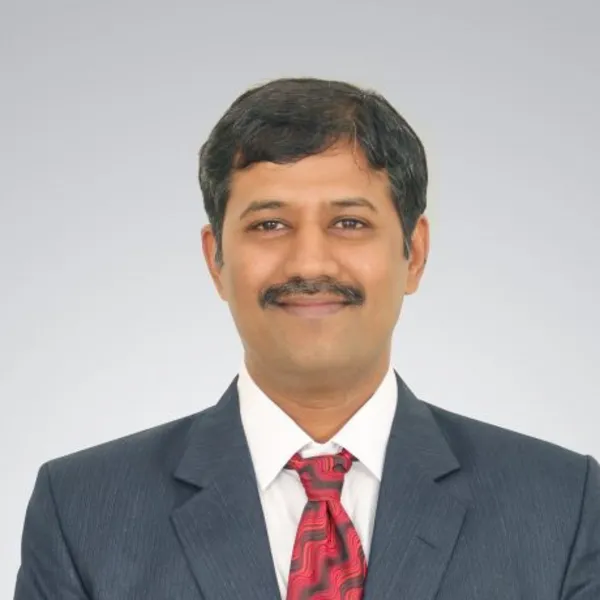
Dr Sandeep Patil V
Associate Professor and Head, OrthopaedicsTrauma surgery, arthroscopy, Ilizarov surgery and joint replacement - Orthopaedics
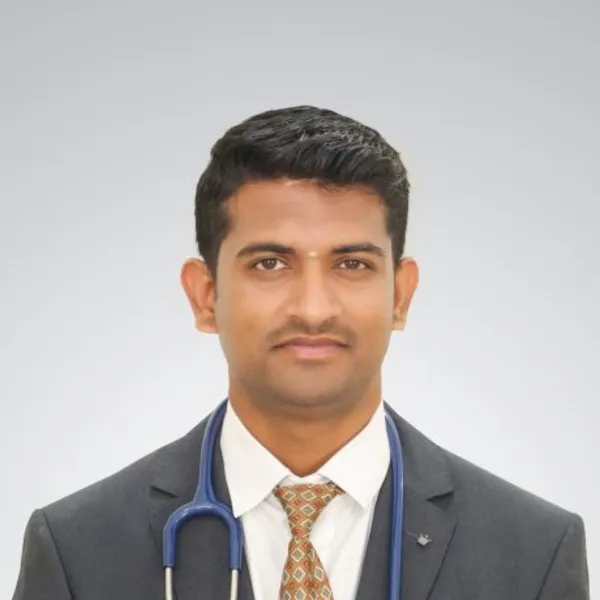
Dr Gokul B S
Assistant Professor, OrthopaedicsAdvanced trauma, arthroscopy and pain management, with interests in joint replacement and endoscopic spine surgery - Orthopaedics
Dr Mahesh Sagar K
Assistant Professor, OrthopaedicsGeneral orthopaedics, with a special interest in foot and ankle surgery

On one campus
Facilities for trauma care
24x7 emergency
Fractures, dislocations and accident injuries are seen at any hour in the emergency department, with orthopaedic surgeons on call.
X-ray and CT on campus
The Department of Radio Diagnosis has X-ray, ultrasound and CT scanning on the same campus, so most fractures and joint problems are imaged on the day of your visit. An MRI scanner is being added.
Operation theatres
Orthopaedic operations take place in the hospital’s modular operation theatres, six in all, staffed by anaesthesiologists and theatre technicians.
Intensive care
The hospital’s 40-bed intensive care unit looks after patients who need close watching after major surgery or serious injury.
Cost and insurance
Cost and insurance
In an emergency we treat first and sort out the paperwork after. For insured patients in an emergency, our insurance counsellors handle pre-authorisation from the bedside while you are being treated.
Cashless insurance
SMSIMSR accepts most major private health insurance policies, with cashless treatment for eligible policies and no upfront deposit for approved, covered treatment. Partners include Star Health, Niva Bupa, Care Health, HDFC ERGO, ICICI Lombard, New India Assurance, United India, Oriental, National Insurance and TPAs such as Medi Assist, MD India, FHPL and Vidal Health.
Insurance and cashless treatmentInsurance help desk
Check your policy before admission. Bring your insurance e-card, photo ID (Aadhaar or Voter ID) and PAN card.
82174 16049Government schemes
Ask the insurance help desk which government health schemes apply to your treatment.
Location
How to reach us
Emergency, 24x7
Fractures, dislocations and accident injuries: come straight to the emergency department or call.
+91 92402 62107Address
Department of Orthopaedics, Sri Madhusudan Sai Institute of Medical Sciences and Research, Sathya Sai Grama, Muddenahalli, Chikkaballapur, Karnataka - 562101
Get directions (opens Google Maps in a new tab)OPD timings
8 AM to 4 PM
Drive times to SMSIMSR, Muddenahalli
| From | Distance | By car |
|---|---|---|
| Chikkaballapur town | About 7 km | 10 to 15 minutes |
| Kempegowda International Airport | About 25 km | 30 to 40 minutes |
| Devanahalli | About 30 km | 35 to 45 minutes |
| Yelahanka | About 42 km | 50 to 60 minutes |
| Hebbal | About 52 km | About 1 hour 15 minutes |
| Central Bengaluru (Majestic) | About 60 km | 1 hour 30 minutes or more |
Approximate road distances. Travel time depends on traffic. Buses from Bengaluru to Chikkaballapur run via Hebbal, Yelahanka and Devanahalli.
Why SMSIMSR
Why choose SMSIMSR
NABH accredited hospital
Accredited by the National Accreditation Board for Hospitals and Healthcare Providers, certificate number PEH-2026-3255.
A teaching hospital
Our surgeons teach MS Orthopaedics trainees and publish their results, so care follows current evidence.
Tests, surgery and rehab on one campus
X-ray, CT, operation theatres, intensive care and physiotherapy in one place, so you are not sent elsewhere.
Care without discrimination
Every patient is treated with the same care, whatever their income, religion, caste or home state.
Close to North Bengaluru
About 25 km from Kempegowda International Airport and 7 km from Chikkaballapur town, away from city traffic.
Questions
Questions about fractures
What should I do if I think I have a fracture?
Keep the injured part still, support it as you found it with a folded towel or splint, remove rings and bangles, put wrapped ice on the swelling, and do not eat or drink. Come straight to the 24x7 emergency department. Do not try to straighten the limb.
What is a hairline fracture?
A hairline fracture is a thin crack in a bone that does not go all the way through. It often comes from repeated strain or a minor fall, causing pain that builds with activity. It may not show on the first X-ray. Most heal in 6 to 8 weeks with rest and sometimes a boot or cast.
How long does a fracture take to heal?
Most adult fractures take 6 to 12 weeks to heal: a wrist about 6 to 8 weeks, an ankle 6 to 10 weeks, and a thigh bone 3 to 6 months. Children heal faster. Smoking, diabetes and poor nutrition slow healing. Your surgeon checks progress with X-rays.
Does every fracture need surgery?
No. Many fractures heal in a plaster cast, splint or sling. Surgery is needed when the broken ends are badly out of line, the break enters a joint, the bone is unstable, the skin is broken, or when an operation gets you walking sooner, as with most hip fractures.
Is the orthopaedic emergency service open at night?
Yes. The emergency department is open 24 hours a day, every day, including nights, Sundays and holidays. X-ray and CT are available, and an orthopaedic surgeon is called for fractures and dislocations. Call +91 92402 62107 or come straight in.
How long does a plaster cast stay on?
Usually 3 to 8 weeks, depending on the bone, your age and how the fracture is healing. A child’s wrist cast may come off in 3 to 4 weeks; an adult ankle often needs 6 weeks or more. Keep the cast dry and come back at once if fingers or toes turn blue, numb or very painful.
Do I need an appointment for an injury?
No. For a fresh injury, fracture, dislocation or accident, come straight to the 24x7 emergency department without an appointment. For an old injury that still hurts, call us to book, or walk in to the orthopaedic OPD between 8 AM and 4 PM.
Is an ambulance available?
In a road accident, call 108, the national emergency ambulance number, and ask to be brought to SMSIMSR, Muddenahalli. Do not move a person with neck or back pain yourself.
Last updated: 16 November 2026. Medical information on this page follows: NICE guidelines NG226 (osteoarthritis), NG59 (low back pain and sciatica) and CG124 (hip fracture); NHS patient information; AAOS OrthoInfo; Evans JT et al. The Lancet, 2019 (knee and hip implant survival); Grindem H et al. British Journal of Sports Medicine, 2016 (return to sport after ACL reconstruction). It does not replace a consultation with a doctor.