
Orthopaedics: Paediatric Orthopaedics
Paediatric Orthopaedics at SMSIMSR: Children’s Bone Care near Bangalore
Clubfoot, bow legs, flat feet, scoliosis and fractures in children, mostly treated without surgery
- 1,000+Deformity corrections by our head of department
- Birth to 18Ages we treat
For parents
A child orthopedic doctor for growing bones
Children’s bones are still growing, so they need a doctor who knows what is normal at each age. Our child orthopedic doctor at SMSIMSR, near Bangalore, sees babies, children and teenagers with problems of the feet, legs, hips and spine, and with fractures. Most are treated with casts, braces or exercises, not surgery.
Children are seen by our orthopaedic surgeons, working with the paediatrics department on the same campus.
Many things that worry parents, such as bow legs in a toddler or flat feet in a young child, are a normal stage of growing. Our first job is to tell you whether your child’s legs or feet are normal for their age, and to treat early when they are not.
Specialities
Children’s bone conditions, one by one
What is clubfoot and can it be corrected?
Clubfoot is a condition a baby is born with: one or both feet turn inwards and downwards. It affects about 1 in every 1,000 babies. Yes, it can almost always be corrected without major surgery using the Ponseti method, best started in the first weeks of life.
Are bow legs normal in toddlers?
Yes. Most babies and toddlers have bow legs until about age 2. The legs then straighten and often become knock-kneed between 3 and 7 years, before settling straight by about 7 or 8. See a doctor if the bowing is severe, affects only one leg, gets worse after age 2, or your child is short for their age or limps.
When should I worry about my child’s flat feet?
Almost all toddlers have flat feet, and the arch develops slowly through childhood. Flexible flat feet, where the arch appears when the child stands on tiptoe, usually need no treatment. See us if the foot is painful, stiff, flat on one side only, or your child tires quickly when walking.
What is scoliosis in children?
Scoliosis is a sideways curve of the spine of 10 degrees or more. The most common type appears between 10 and 18 years for no known reason. Signs include one shoulder higher than the other, a shoulder blade that sticks out, an uneven waist, or a hump on one side of the back when your child bends forward. Mild curves are watched with X-rays; a brace is used for moderate curves in a growing child; surgery is considered for large curves.
Hip problems in babies
In developmental dysplasia of the hip (DDH), the hip socket is shallow and the ball can slip out. It is more common in girls, firstborn babies, babies born in the breech position and when a parent had it. Signs are uneven thigh creases, one leg shorter, or a limp when the child starts walking. Found early, it is usually treated with a soft harness.
Fractures
Fractures in children and why they are treated differently
Children’s bones are softer and bend before they break, so they get "greenstick" and "buckle" fractures that adults do not. They heal faster, often in half the time, and can reshape themselves as the child grows. Breaks near the growth plates at the ends of bones need careful follow-up to make sure the bone keeps growing straight.
Most children’s fractures are treated with a cast and heal in 3 to 6 weeks. Fresh fractures are seen at any hour in our 24x7 emergency department.
Walking
Signs to watch for as your child starts walking
- Not walking on their own by about 18 months
- A limp, or refusing to put weight on one leg
- Walking on tiptoes most of the time after age 2 to 3
- Bow legs that get worse after age 2, or affect one leg only
- Knock knees that are severe or still present after age 8
- One leg looking shorter, or uneven creases on the thighs
- Pain in a bone or joint that wakes your child at night, or comes with fever
In-toeing (walking with the feet turned in) is common in toddlers and usually corrects itself by age 8 without treatment.
What we offer
Treatments, most of them without surgery
| Treatment | Used for | Hospital stay | How long |
|---|---|---|---|
| Ponseti casting | Clubfoot: gentle stretching and a new plaster cast every week | None, weekly visits | Usually 5 to 8 casts |
| Achilles tenotomy | A tiny release of the heel cord under local anaesthetic, needed by most babies with clubfoot | Day care | A final cast for about 3 weeks |
| Foot abduction brace | Keeps the clubfoot corrected after casting | None | Full time for 3 months, then at night until age 4 to 5 |
| Harness or brace for the hip | Hip dysplasia in babies | None | Usually several weeks to months |
| Spinal brace | Moderate scoliosis in a growing child | None | Worn daily until growth stops |
| Deformity correction and limb lengthening | Severe bow legs, knock knees and unequal leg length | Varies | Planned for each child |
Typical figures from AAOS and NHS patient guidance.
Is surgery always needed for clubfoot?
No. With the Ponseti method, most babies need only weekly casts, a tiny release of the heel cord (Achilles tenotomy) and a brace. Larger operations are rarely needed, mainly when treatment starts late or the foot turns in again.
Children’s orthopaedics
Doctors who treat children
- Orthopaedics
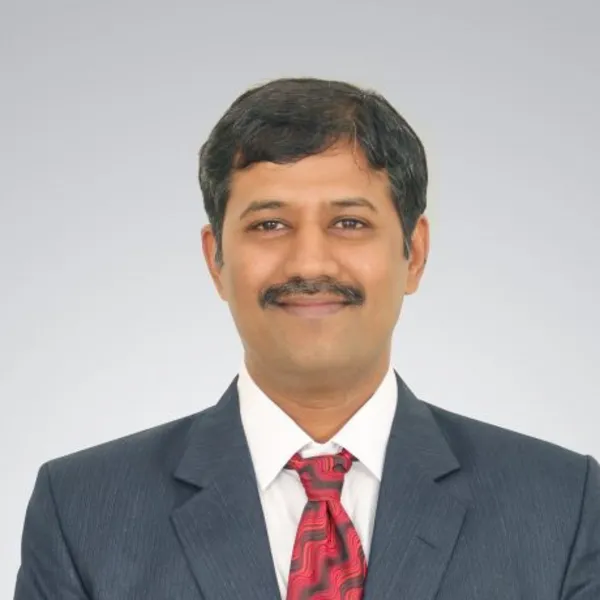
Dr Sandeep Patil V
Associate Professor and Head, OrthopaedicsTrauma surgery, arthroscopy, Ilizarov surgery and joint replacement - Orthopaedics
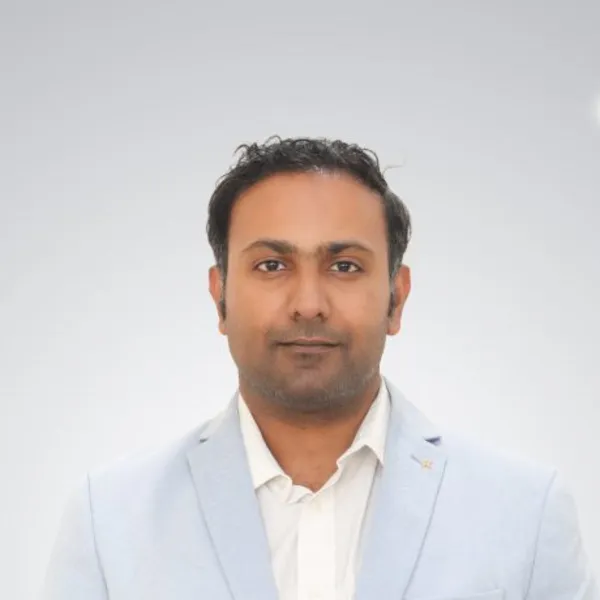
Dr Gokul B S
Assistant Professor, OrthopaedicsAdvanced trauma, arthroscopy and pain management, with interests in joint replacement and endoscopic spine surgery - Orthopaedics
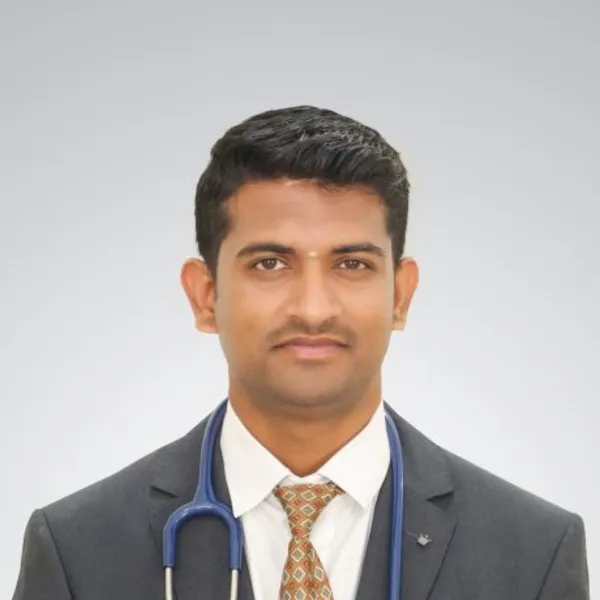
Dr Mahesh Sagar K
Assistant Professor, OrthopaedicsGeneral orthopaedics, with a special interest in foot and ankle surgery
Children are also treated with the paediatrics department on the same campus.
On one campus
Facilities for children
X-ray and CT on campus
The Department of Radio Diagnosis has X-ray, ultrasound and CT scanning on the same campus, so most fractures and joint problems are imaged on the day of your visit. An MRI scanner is being added.
Operation theatres
Orthopaedic operations take place in the hospital’s modular operation theatres, six in all, staffed by anaesthesiologists and theatre technicians.
24x7 emergency
Fractures, dislocations and accident injuries are seen at any hour in the emergency department, with orthopaedic surgeons on call.
Wards and children’s care
Patients recover in the hospital wards, and children are cared for with the paediatrics department on the same campus.
Cost and insurance
Cost and insurance
Cashless insurance
SMSIMSR accepts most major private health insurance policies, with cashless treatment for eligible policies and no upfront deposit for approved, covered treatment. Partners include Star Health, Niva Bupa, Care Health, HDFC ERGO, ICICI Lombard, New India Assurance, United India, Oriental, National Insurance and TPAs such as Medi Assist, MD India, FHPL and Vidal Health.
Insurance and cashless treatmentInsurance help desk
Check your policy before admission. Bring your insurance e-card, photo ID (Aadhaar or Voter ID) and PAN card.
82174 16049Government schemes
Ask the insurance help desk which government health schemes apply to your treatment.
Why SMSIMSR
Why choose SMSIMSR
NABH accredited hospital
Accredited by the National Accreditation Board for Hospitals and Healthcare Providers, certificate number PEH-2026-3255.
A teaching hospital
Our surgeons teach MS Orthopaedics trainees and publish their results, so care follows current evidence.
Tests, surgery and rehab on one campus
X-ray, CT, operation theatres, intensive care and physiotherapy in one place, so you are not sent elsewhere.
Care without discrimination
Every patient is treated with the same care, whatever their income, religion, caste or home state.
Close to North Bengaluru
About 25 km from Kempegowda International Airport and 7 km from Chikkaballapur town, away from city traffic.
Location
How to reach us
Emergency, 24x7
Fractures, dislocations and accident injuries: come straight to the emergency department or call.
+91 92402 62107Address
Department of Orthopaedics, Sri Madhusudan Sai Institute of Medical Sciences and Research, Sathya Sai Grama, Muddenahalli, Chikkaballapur, Karnataka - 562101
Get directions (opens Google Maps in a new tab)OPD timings
8 AM to 4 PM
Drive times to SMSIMSR, Muddenahalli
| From | Distance | By car |
|---|---|---|
| Chikkaballapur town | About 7 km | 10 to 15 minutes |
| Kempegowda International Airport | About 25 km | 30 to 40 minutes |
| Devanahalli | About 30 km | 35 to 45 minutes |
| Yelahanka | About 42 km | 50 to 60 minutes |
| Hebbal | About 52 km | About 1 hour 15 minutes |
| Central Bengaluru (Majestic) | About 60 km | 1 hour 30 minutes or more |
Approximate road distances. Travel time depends on traffic. Buses from Bengaluru to Chikkaballapur run via Hebbal, Yelahanka and Devanahalli.
Questions
Questions from parents
What is clubfoot and can it be corrected?
Clubfoot is a condition present at birth in which one or both feet turn inwards and downwards. It affects about 1 in 1,000 babies. It can almost always be corrected with the Ponseti method: weekly plaster casts, a small heel cord release and a brace. Treatment works best when started in the first weeks of life.
Are bow legs normal in toddlers?
Yes. Most children have bow legs until about age 2. The legs then often become knock-kneed between 3 and 7 years and straighten by about 7 or 8. See a doctor if the bowing is severe, on one side only, getting worse after age 2, or your child limps or is short for their age.
When should I worry about my child’s flat feet?
Most young children have flat feet, and the arch forms gradually. Flexible flat feet that show an arch on tiptoe need no treatment. See an orthopaedic doctor if the feet are painful, stiff, flat on one side only, or your child tires easily, as these may need tests.
What is scoliosis in children?
Scoliosis is a sideways curve of the spine of 10 degrees or more, most often appearing between 10 and 18 years. Signs include uneven shoulders or waist and a hump when bending forward. Mild curves are watched, moderate curves in growing children are braced, and large curves may need surgery.
Do children’s fractures heal faster than adults’?
Yes. Children’s bones have a thick outer lining with a rich blood supply, so most fractures heal in about half the time an adult’s would, often 3 to 6 weeks. Growing bones can also straighten themselves over time. Breaks near growth plates need follow-up to check normal growth.
At what age should a child see an orthopaedic doctor?
At any age when there is a concern. Babies with clubfoot or a suspected hip problem should be seen in the first weeks of life. Toddlers with a limp, one-sided bow legs or tiptoe walking, and teenagers with an uneven back or shoulders, should be checked without waiting.
Is surgery always needed for clubfoot?
No. Most babies are treated with the Ponseti method: about 5 to 8 weekly casts, a small heel cord release under local anaesthetic, and a brace worn at night until about age 4 or 5. Larger operations are needed only rarely, mostly when treatment starts late.
How do I book a paediatric orthopaedic appointment?
Call +91 92402 62107 and ask for a children’s orthopaedic appointment, or walk in to the orthopaedic OPD between 8 AM and 4 PM. Bring your child’s birth certificate or ID, vaccination card, any X-rays and earlier reports. Fresh fractures come straight to emergency.
Last updated: 16 November 2026. Medical information on this page follows: NICE guidelines NG226 (osteoarthritis), NG59 (low back pain and sciatica) and CG124 (hip fracture); NHS patient information; AAOS OrthoInfo; Evans JT et al. The Lancet, 2019 (knee and hip implant survival); Grindem H et al. British Journal of Sports Medicine, 2016 (return to sport after ACL reconstruction). It does not replace a consultation with a doctor.