
Cardiothoracic and Vascular Surgery
Heart Valve Repair and Replacement Surgery
When a heart valve is too narrow or leaks badly, surgery can repair or replace it. Valve repair is a special interest of our surgeons
Treatment
What it is
The heart has four valves that keep blood moving forward. A valve can become narrow (stenosis) or leaky (regurgitation). In India, a common cause is rheumatic heart disease, which follows untreated throat infections in childhood. Other causes include ageing, infection and defects present from birth.
Valve repair keeps your own valve and fixes it, for example by reshaping the leaflets or fitting a ring to tighten it. Repair avoids lifelong blood thinners in many cases and is often preferred, especially for the mitral valve and for children. Valve replacement removes the damaged valve and puts in a new one.
Who needs it
- Severe narrowing or leaking of the mitral, aortic or tricuspid valve
- Rheumatic heart disease with breathlessness or heart failure
- Valve damage from infection (endocarditis)
- Children with valve defects present from birth
How it is done at SMSIMSR
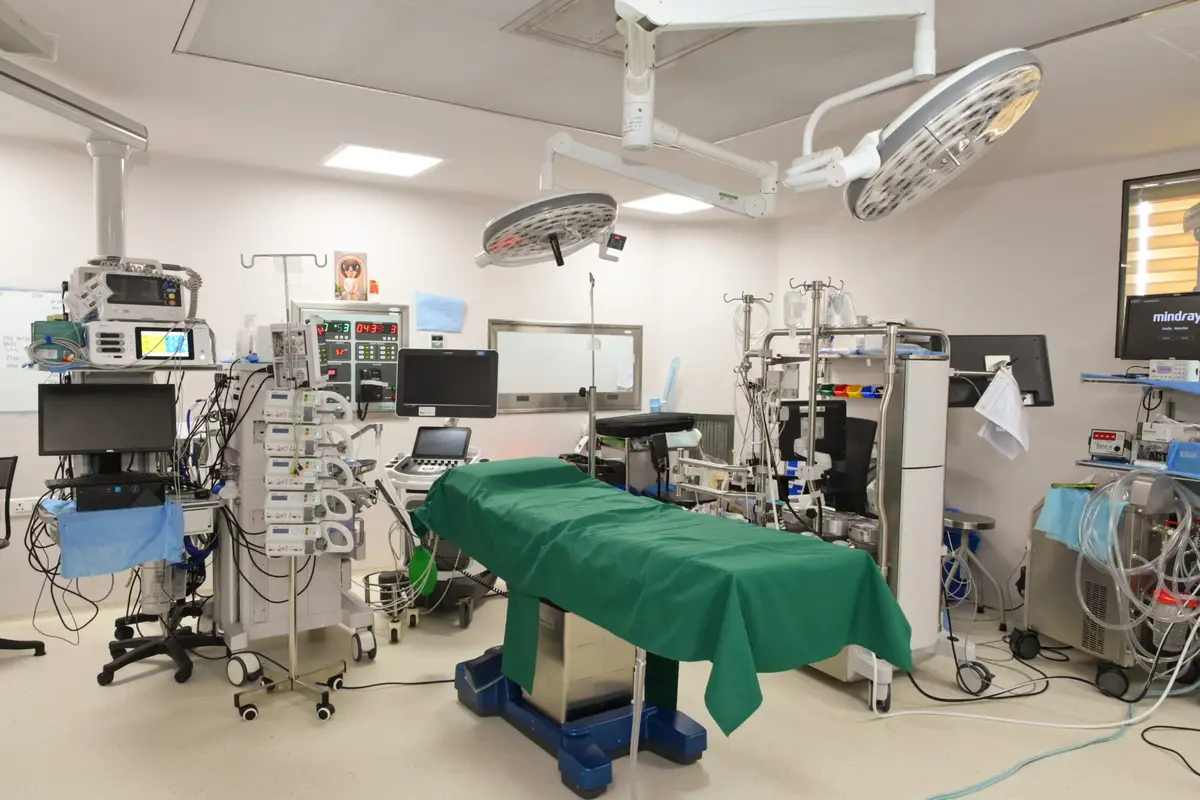
Valve surgery is open heart surgery with a heart-lung machine, under general anaesthesia, and usually takes three to five hours. A transoesophageal echo during surgery checks the repair or new valve before the chest is closed.
Dr C S Hiremath has a long record in valve surgery, including a 20-year study of over 2,000 patients with the TTK Chitra mechanical valve. SMSIMSR hosted the First International Conference on Paediatric Heart Valve Repair in 2024.
Mechanical and tissue valves
Mechanical valves are made of strong materials and can last a lifetime, but you must take a blood thinner such as warfarin every day for life, with regular INR blood tests. Tissue (bioprosthetic) valves are made from animal tissue and usually do not need lifelong blood thinners, but may wear out after some years. Your surgeon will help you choose, taking into account your age, plans for pregnancy, and how easily you can get INR tests.
Recovery
Most patients spend one to three days in the cardiac ICU and go home in about a week. Recovery is similar to bypass surgery: walking every day, avoiding heavy lifting for about three months, and returning to work in six to eight weeks.
If you have a mechanical valve, you must take your blood thinner every day and check your INR as advised. Tell every doctor and dentist about your valve. Patients with rheumatic heart disease may need regular penicillin injections to protect the valves.
Doctors who perform heart valve repair and replacement
- Cardiothoracic and Vascular Surgery
Dr Channabasavaraj S Hiremath
Senior Surgeon and Director, Heart Valve BankValve repair, congenital heart surgery, coronary and aortic surgery - Cardiothoracic and Vascular Surgery
Dr Anand Kumar Agarwal
Senior Surgeon and Head of DepartmentBeating-heart bypass, valve surgery and minimal access heart surgery


Questions about heart valve repair and replacement
Is repair better than replacement?
When a valve can be repaired well, repair is often preferred because you keep your own valve and may avoid lifelong blood thinners. Not every valve can be repaired; your surgeon will advise.
Can women with a mechanical valve have children?
Pregnancy with a mechanical valve is possible but needs very careful planning, as blood thinners affect the baby. Discuss plans for pregnancy with your surgeon before valve choice.
Centre for Cardiac Sciences