
Cardiac Sciences
Cardiac Anaesthesia and Critical Care
Keeping you safe and comfortable before, during and after heart surgery
Anaesthesia
Cardiac anaesthesia
A cardiac anaesthetist is a doctor who puts you safely to sleep for heart surgery, watches your heart, lungs and brain throughout the operation, and controls pain afterwards. For children, the anaesthetist has special training in the tiny doses and equipment babies need.
During many heart operations our anaesthetist uses transoesophageal echocardiography (TEE), a heart scan from a probe in the food pipe, to check the heart and the surgeon’s repair before the chest is closed.
Before your operation
- You meet the anaesthetist, who reviews your health, tests and medicines
- You are told when to stop eating and which medicines to take
- Ask any questions you have about anaesthesia and pain control
Cardiac intensive care
After heart surgery or a serious heart attack, patients are cared for in intensive care. The hospital’s 40-bed Intensive Care Unit includes medical, surgical, obstetric, paediatric, neonatal, cardiac and isolation beds, with ventilators and dialysis machines, and is run by qualified doctors and nurses.
Operation theatres
The hospital has six modular operation theatres, staffed by qualified anaesthesiologists and theatre technicians, with real-time video links used for teaching.
Where you will be cared for
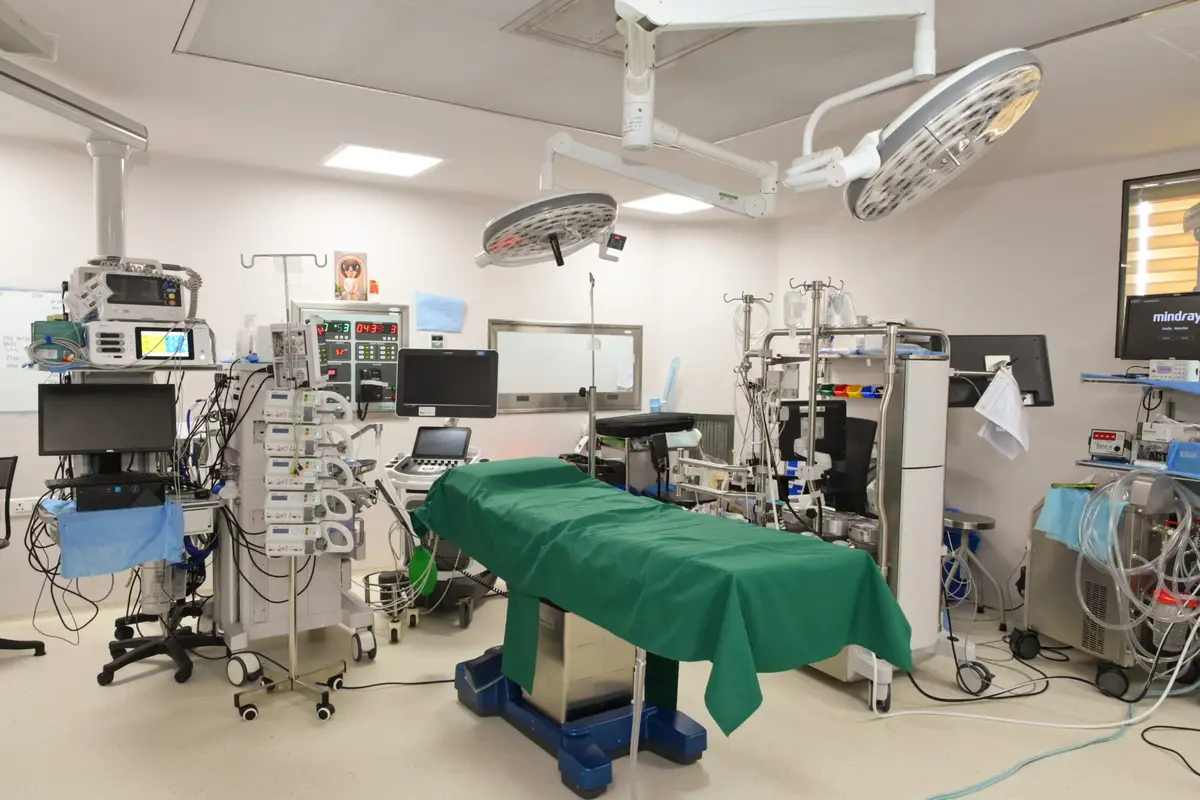
Cardiac operation theatre
Heart operations take place in modular operation theatres equipped for open heart surgery, where a heart-lung machine can take over while the surgeon repairs the heart. The hospital has six modular theatres in all, run by anaesthesiologists and theatre technicians, with real-time video links used for teaching.
Cardiac ICU and CCU
After heart surgery or a heart attack, patients are watched closely in intensive care by trained doctors and nurses, with heart monitors, ventilators and dialysis machines at hand. The hospital’s 40-bed ICU includes cardiac, paediatric, neonatal, surgical and medical beds.
Centre for Cardiac Sciences